
An orthodontist does two to three years of specialist training after dental school, on nothing but how teeth move. That is who plans your treatment here, whether you end up in braces or in trays.
- Planned by an orthodontist not a general dentist fitting a tray system
- Open seven days, Sunday included adjustments without taking a day off
- Hablamos español ask your questions in Spanish

What an orthodontist actually is
Every orthodontist is a dentist. Very few dentists are orthodontists, and the gap between the two is bigger than most people expect.
After dental school, an orthodontist completes an accredited residency in nothing but orthodontics: 24 to 36 months, around 3,700 hours, on how teeth move through bone and how the jaws grow. It is the same kind of step as a GP going on to train as a surgeon.
Why it matters for a tray system
Clear aligners are sold to dentists as a product, and a great deal of aligner treatment in the US is planned by general dentists who bought the system. For a mild case that is often fine. For a bite that needs the back teeth moved, a root uprighted or growth taken into account, planning is the whole job, and planning is the part an orthodontist spent three years on.
It is also the reason we will tell you when braces are the better answer, even though trays are the easier sell.
Braces or clear aligners?
Both move teeth. They suit different mouths and different people, and your bite decides more than your preference does.
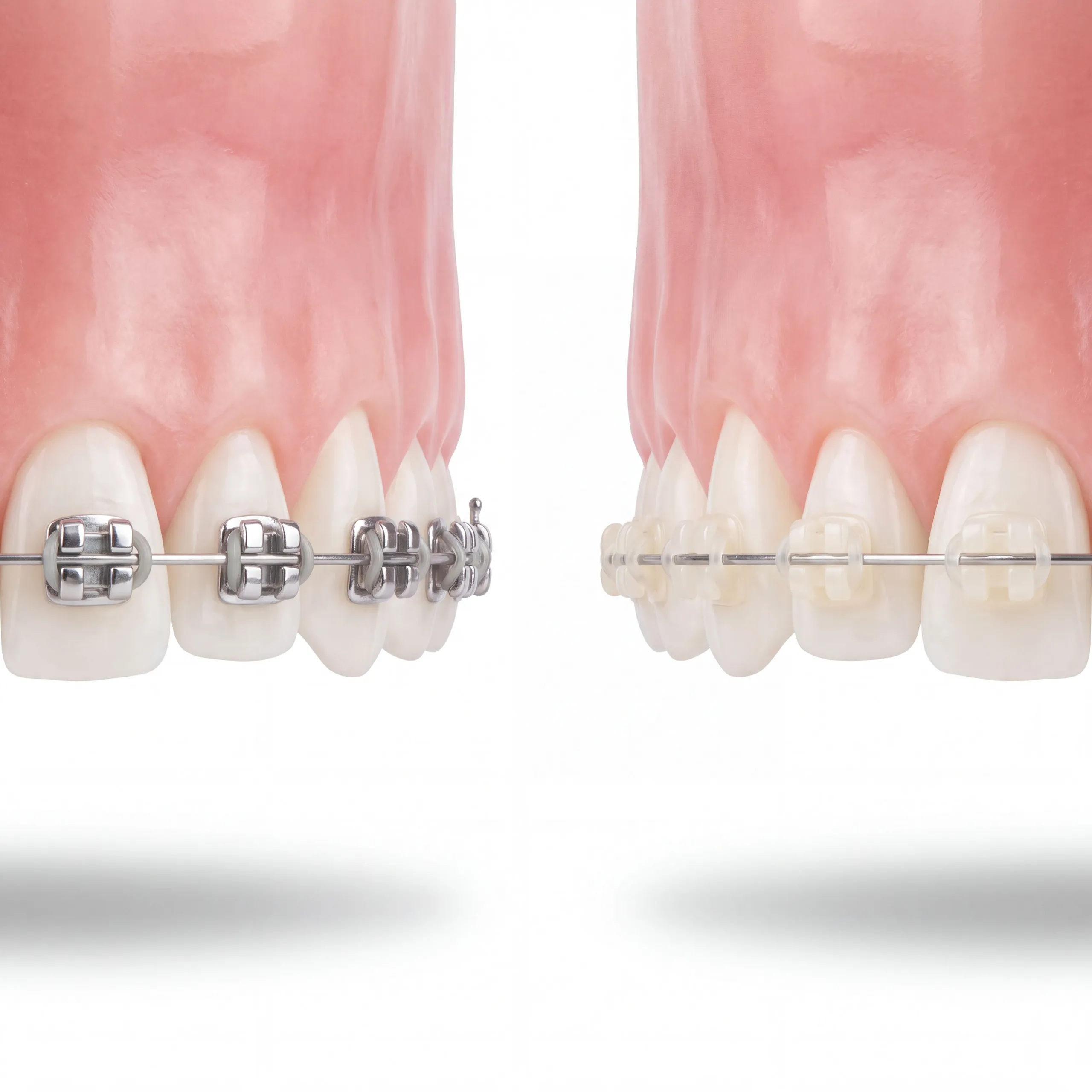
- How they work
- Brackets bonded to the teeth with a wire between them
- What they handle
- Everything, including rotations, root movement and complicated bites
- What they ask of you
- Nothing. They are on, and they stay on.
- How visible
- Metal is obvious; ceramic is much less so
- Eating
- A list of things to avoid for the whole treatment
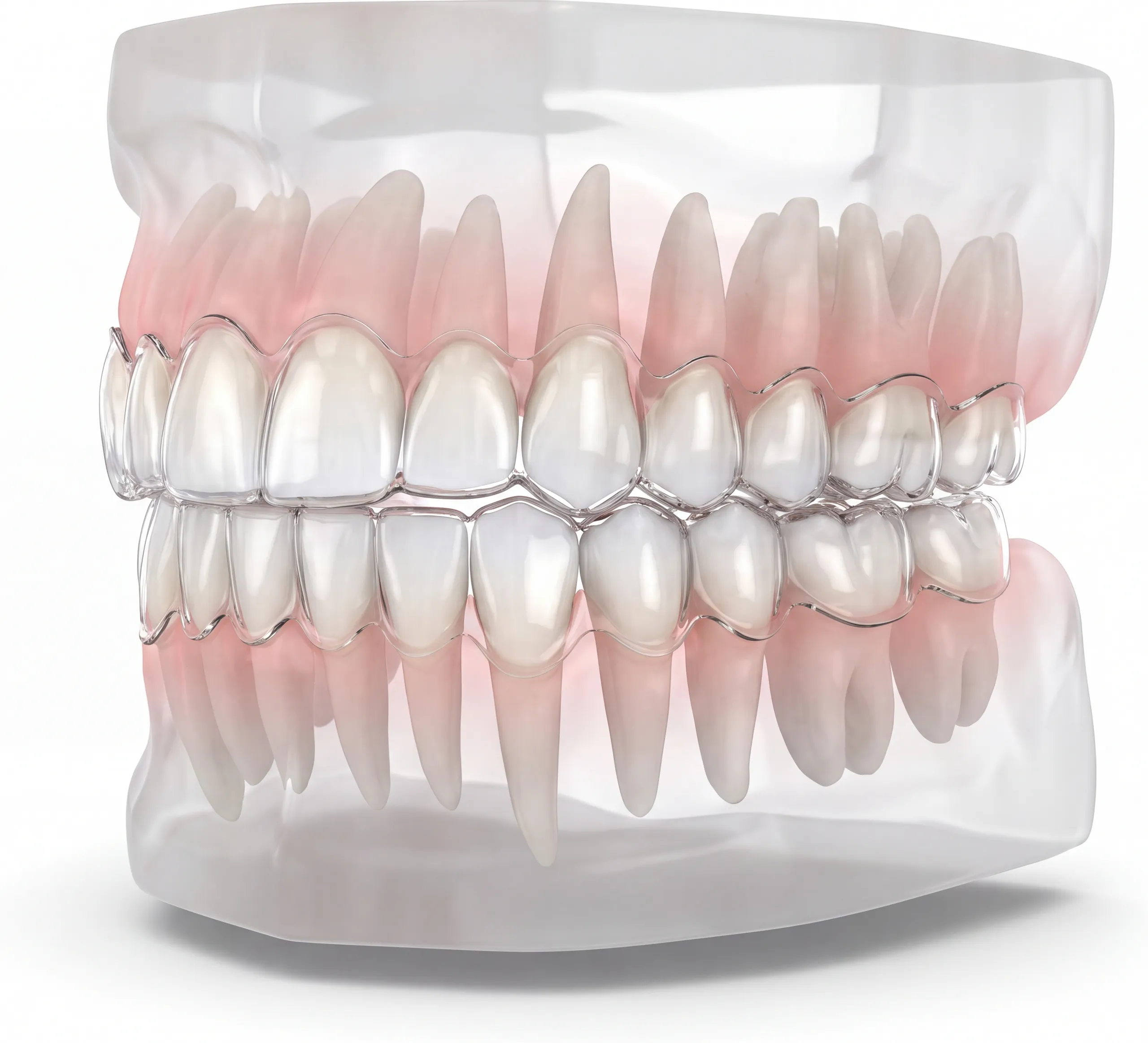
- How they work
- A series of removable trays, each one slightly different
- What they handle
- Mild to moderate crowding and spacing, and more with attachments
- What they ask of you
- Twenty-two hours a day, every day. Take them out too often and treatment stalls.
- How visible
- Nearly invisible across a room, noticeable up close once attachments go on
- Eating
- They come out, so nothing is off the menu


Children, teenagers and adults
There is no age at which it stops being possible. There is an age at which it gets easier.
A first check by age seven
The AAO recommends a child's first orthodontic check-up no later than age seven. Treatment usually does not start then. By seven there are enough permanent teeth to see whether a problem is developing, and some problems are far cheaper to steer early than to correct later.
American Academy of Orthodontists
Teenagers
The usual window, and the reason is growth: a jaw that is still developing can be guided in a way an adult jaw cannot. Most full treatments happen here.
Adults
Perfectly normal and increasingly common. Teeth move at any age. What changes is that there is no growth to work with, so some bite problems need a different plan, and gum health has to be sound before anything starts.
What happens, step by step
- 11
Consultation and records
A look at your bite, photographs and a scan. You find out whether treatment is needed at all, what the options are, and roughly how long it would take.
- 22
Your plan and your price
In writing, before anything starts. What is being moved, with what, over roughly how long, and what it costs.
- 33
Fitting
One appointment. Brackets bonded and a first wire, or your first set of trays with any attachments placed.
- 44
Adjustments
Every few weeks for braces, or a new tray every week or two at home with check-ins in between.
- 55
Off, and retainers on
The day everything comes off is the day retention starts. That part does not end.

Retainers are for life, and nobody tells you that first
Teeth drift throughout life whether or not you have had treatment, and they drift fastest in the months right after it. A retainer is what holds the result: full-time at first, then nightly, indefinitely.
We would rather you knew before you start than discovered it at the end. It is not a reason to avoid treatment. It is a reason to budget for replacing a retainer occasionally, because they crack, warp and get lost.

What it costs
There is no single number, and a page that gives you one is guessing. What you pay depends on how far the teeth have to move, which appliance does it and how long it takes. A minor correction and a full bite rebuild are very different treatments.
You get your price in writing after the consultation, before anything starts.
Some dental plans include an orthodontic benefit, often a lifetime maximum rather than a yearly one. Call us with your plan and we will help you work out what it covers.
We don't accept AHCCCS (Arizona Medicaid).
Paying for treatmentQuestions patients ask
Yes. Braces and aligners here are planned and fitted by an orthodontist, not by a general dentist with a tray system. You can ask to see the treatment plan and who wrote it.
Most full treatments run somewhere between a year and a bit over two, and simple cases are quicker. The answer for your mouth comes after records are taken, because it depends on how far the teeth have to travel and whether the bite is being changed as well as the alignment.
Sometimes, with attachments and more planning; sometimes not. A tray is very good at tipping a crown and less good at moving a root, and that is what decides it.
Routinely. The main differences for an adult are that there is no jaw growth to work with and that gum health has to be sound before anything starts, because moving teeth through unhealthy bone is a bad idea.
It is exactly the age the AAO suggests for a first check. Most seven-year-olds who come in need nothing yet and we see them again in a year or two, and that is the purpose of the visit: to find out.
Effectively yes, nightly, for as long as you want to keep the result. This is the same answer after braces as after aligners, and it is the thing most people wish they had been told at the start.
We are open seven days, Sunday included, so adjustments do not have to cost a school day or a day off work.
What patients say
“Having everything in one place with a gentle staff helped ease a ton of anxiety.”
1 of 10
Related treatments
Not sure which one you need?
Tell us what bothers you about your teeth and we will tell you whether it is an orthodontic problem at all, and which appliance would be the sensible answer.
- We reply the same day we are open, seven days a week.
- A straight answer about braces versus trays.
- Hablamos español. Ask in Spanish if you prefer.
Find out what your bite needs
A consultation tells you whether treatment is worth doing, which appliance suits your case, roughly how long it would take and what it costs. If the answer is that you do not need it, you will hear that too.
Open 7 days a week
- Open seven days, Sunday included.
- We don't accept AHCCCS (Arizona Medicaid).
- Hablamos español.
- Wheelchair-accessible entrance, parking and restroom.
