
One tooth or a full arch, placed by a board-certified implant dentist. All-on-4 starts from $9,999.
- Board-certified implant dentist American Board of Oral Implantology
- 4.9 from 1,327 Google reviews November 2026
- Open seven days a week Sunday included

What is a dental implant?

- 1
Crown The tooth you see
A single tooth, a bridge or a full set of teeth, made to match your bite.
- 2
Abutment The connector
A small piece that joins the tooth on top to the post below.
- 3
Implant post The new root
A small titanium or zirconia post placed in your jawbone. Over a few months the bone grows around it and holds it firmly.
Because it is anchored in bone, an implant does not rest on your gums like a denture, and it does not need the teeth next to it for support like a regular bridge does.
Is an implant right for me?
What you need
- Enough healthy jawbone to hold the post
- Healthy gums
- To be done growing
What can rule it out, or mean treating something first
- Gum disease that hasn't been treated
- A lot of tooth decay, or trouble keeping your teeth clean
- Severe bone loss in the jaw
- Diabetes that isn't under control
- Some bone disorders and autoimmune diseases
If you smoke, tell us. The FDA notes that smoking slows healing and lowers the chance an implant lasts.
Low bone isn't always a no. A bone graft can often rebuild enough to hold an implant.
What are my options for replacing teeth?
The right choice depends on how many teeth you're missing, the health of your bone, and your budget.
| Option | Replaces | How it stays in | How long it lasts | |
|---|---|---|---|---|
 | Single implant | One tooth | Implant post in the jaw | Post: often decades. Crown: around 15 years |
 | Implant bridge | Three or more teeth in a row | Usually two implants hold the bridge | Similar to a single implant |
 | All-on-4 | A full upper or lower arch | Four implants; fixed, you don't take it out | Post: often decades. Teeth may need replacing over time |
 | Snap-in denture | A full arch | Clips onto two or more implants; you take it out to clean | Denture: at least 7 years |
 | Regular bridge | One to a few teeth | Cemented onto the teeth on each side | Around 15 years |
 | Regular denture | Some or all teeth | Rests on the gums; you take it out | At least 7 years |
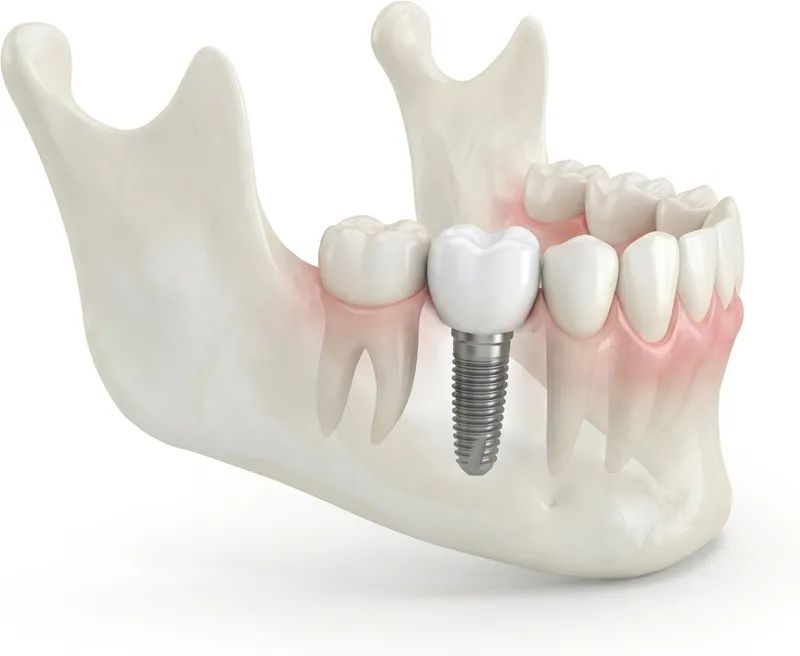
Single implant
- Replaces
- One tooth
- How it stays in
- Implant post in the jaw
- How long it lasts
- Post: often decades. Crown: around 15 years
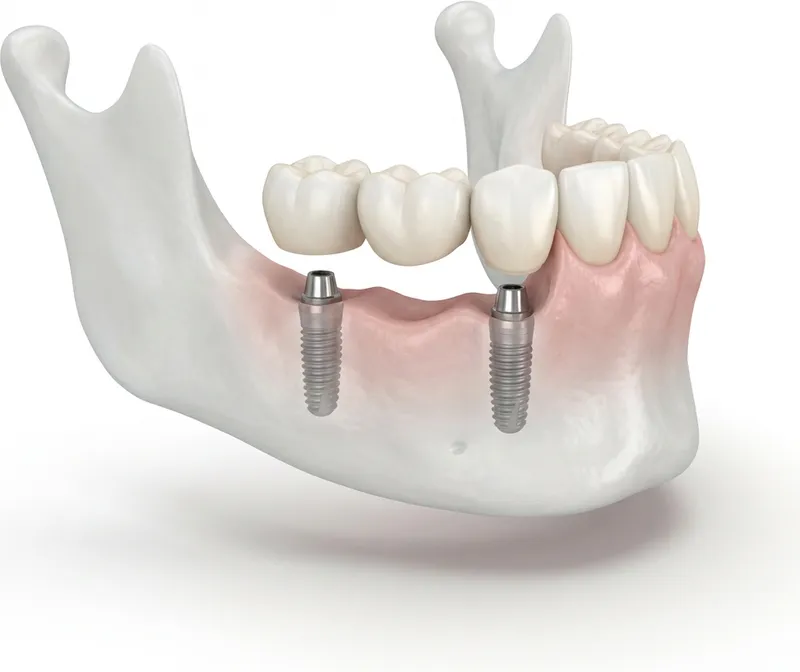
Implant bridge
- Replaces
- Three or more teeth in a row
- How it stays in
- Usually two implants hold the bridge
- How long it lasts
- Similar to a single implant
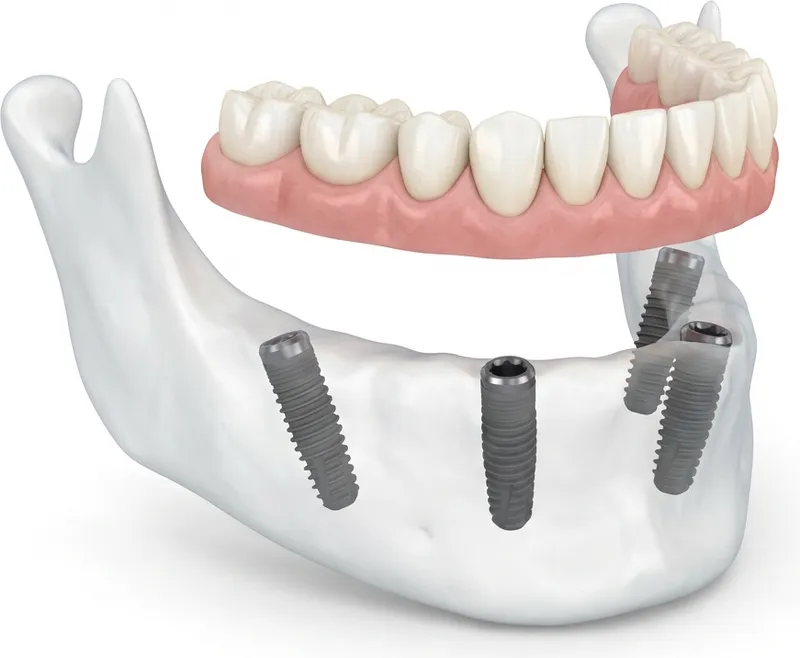
- Replaces
- A full upper or lower arch
- How it stays in
- Four implants; fixed, you don't take it out
- How long it lasts
- Post: often decades. Teeth may need replacing over time
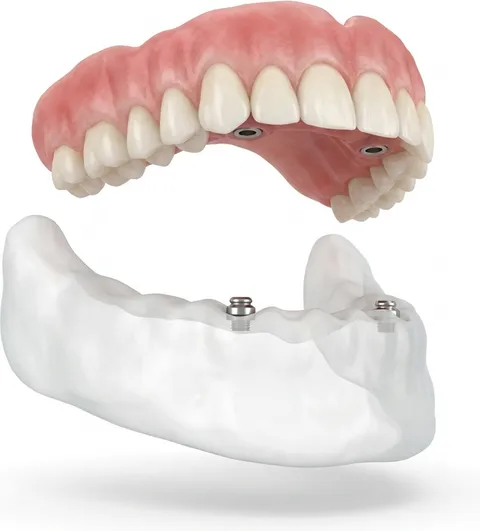
- Replaces
- A full arch
- How it stays in
- Clips onto two or more implants; you take it out to clean
- How long it lasts
- Denture: at least 7 years
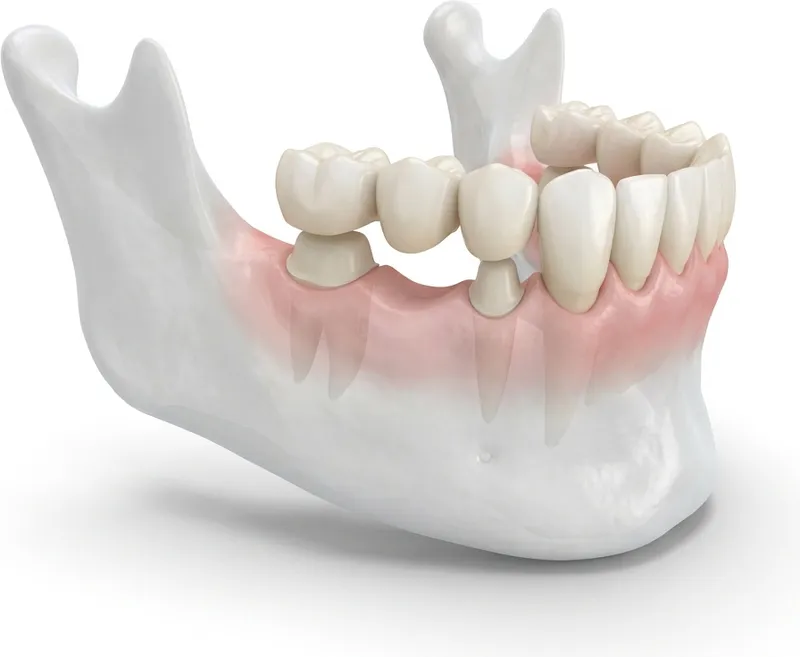
- Replaces
- One to a few teeth
- How it stays in
- Cemented onto the teeth on each side
- How long it lasts
- Around 15 years
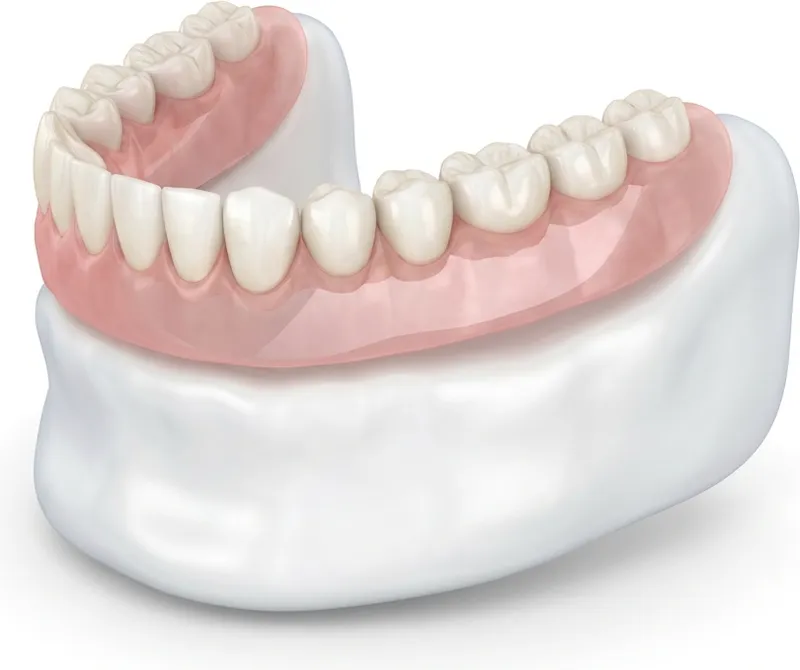
- Replaces
- Some or all teeth
- How it stays in
- Rests on the gums; you take it out
- How long it lasts
- At least 7 years
Lifespans are typical averages for dental work of each kind, not a guarantee for any one case.
What happens, step by step?
Most single-implant treatment takes three to nine months from start to finish, mostly waiting for the bone to heal. You won't be without teeth during that time: you'll usually wear a temporary tooth or denture.
- 11
Consultation
We look at your teeth and gums, take images of your jaw, and talk about what you want. Then we go over your options and what each one costs.
- 22
Removing the tooth, if needed
If a damaged tooth is still there, it comes out first. Sometimes the implant can go in the same visit.
- 33
Bone graft, if needed
If there isn't enough bone, we add it first. This can add a few months.
- 44
Placing the implant
A short procedure with local anesthetic. The post goes into the bone and the gum is closed over or around it.
- 55
Healing
The bone grows around the post over about three to nine months, depending on how fast you heal.
- 66
Your new tooth
We attach a small connector, an abutment, and then your crown, bridge or full set of teeth, made to match your bite.
- 77
Follow-up
Regular cleanings and checkups keep the gum and bone around the implant healthy.

With All-on-4 the plan is usually different: a fixed temporary set of teeth goes in on the day of surgery, and the final set follows after healing.
See All-on-4Does getting an implant hurt?
Placing an implant is done with local anesthetic, so the area is numb. Most people feel pressure and vibration, but no sharp pain.
Afterwards
Soreness and some swelling for a few days. Over-the-counter pain relievers usually handle it.
Back to yourself
Most people feel like themselves within about a week.
Eating
Soft foods for the first days, and chew on the other side.
How long do dental implants last?
96%
of implants were still in place after 10 years
A more cautious analysis in the same review, counting patients who dropped out of the studies, put it at about 93 in 100.
What are the risks or downsides?
Implants are surgery, and surgery has risks. The FDA lists these. FDA guidance

- Damage to nearby teeth, or injury to the sinus or jawbone during placement
- Numbness in the lip, chin or gums if a nerve is irritated or injured
- A tooth that feels loose or twists, often from a loose screw
- The implant not joining the bone, or loosening later
- Trouble cleaning around the implant, which can lead to gum disease
- A bite that doesn't feel right
The other downsides are time and money. An implant takes months and costs more at the start than a bridge or denture. Gum disease can also affect implants: bacteria around the post can cause bone loss and, over time, failure. Good cleaning at home and regular cleanings lower that risk.
How much do dental implants cost?
All-on-4 at IGO starts from $9,999. That's the starting price for a full arch of fixed teeth on four implants.
The price for a single implant depends on whether you need an extraction, a bone graft, and which crown you choose. We'll give you your price at your consultation.
Some dental plans pay part of an implant, usually up to the plan's yearly limit. Call us with your plan and we'll help you work out what it covers.
We don't accept AHCCCS (Arizona Medicaid).
Credit and debit cards, and tap-to-pay from your phone.
Payment optionsWho will place my implants?

Dr. Han Choi, DDS
Board-certified implant dentist
He is a Diplomate of the American Board of Oral Implantology/Implant Dentistry, which means he passed the board's written and oral exams in implant dentistry. He is also a Fellow of the American Academy of Implant Dentistry.

In the US, implants are placed by general dentists and by specialists such as oral surgeons, periodontists and prosthodontists. Training varies a lot from one dentist to the next. Board certification in implant dentistry is one way to see that a dentist's implant training has been tested by an outside board.
Hear from patients who had this done
All three had a full arch on implants at IGO.
4.91,327 Google reviews
Read patient reviewsQuestions patients ask
Sometimes, yes. If the bone is healthy and there's no infection, the implant can often go in right after the tooth comes out. If there's infection or not enough bone, we let the area heal first, or add a bone graft, and place the implant a few months later. Your exam decides which.
Yes. Any licensed dentist can place implants, and many general dentists do. Training ranges from a weekend course to years of study. Ask how many implants the dentist places and what training they've had. Dr. Han Choi is board certified in implant dentistry.
Expect the whole process to take several months. Most of that time is healing, and you'll usually wear a temporary tooth while you wait. It also helps to get a price in writing that covers every step, from any extraction and graft to the final crown. And implants still need brushing, flossing and checkups, the same as natural teeth.
It depends on how many teeth you're replacing. A full arch costs more: All-on-4 at IGO starts from $9,999. The price of a single tooth depends on whether you need an extraction or a graft and which crown you choose. Be careful with very low advertised prices. They often cover only the post, not the abutment and crown.
We're at 512 E Southern Ave, Suite 101, in Tempe, just off Southern Avenue, and most of the East Valley is a twenty to thirty minute drive. Parking is free and right outside. Call us and we will give you directions from where you are.
What patients say
“Having everything in one place with a gentle staff helped ease a ton of anxiety.”
1 of 10
Related treatments
Book a consultation
The first step is a consultation, where we examine your mouth and talk through your options.
Open 7 days a week
- Bring a photo ID and your dental insurance card, if you have one.
- We don't accept AHCCCS (Arizona Medicaid).
- Hablamos español.
- Wheelchair-accessible entrance, parking and restroom.
