Alternatives to Dental Implants: Bridges, Dentures & More
Missing teeth don’t have to mean a lifetime of hiding your smile. While dental implants are the gold standard for tooth replacement, alternatives to dental implants exist for patients who want other options. Whether due to budget, bone structure, or personal preference, understanding your choices helps you make the best decision for your oral health and lifestyle.
At IGO Dental & Implant Center in Tempe, Dr. Han Choi, DABOI, FAAID, has helped hundreds of patients achieve permanent, beautiful smiles. With dual board certifications in implant dentistry, Dr. Choi specializes in complex cases including All-on-4 and full-arch restorations. However, Dr. Choi also recognizes that alternatives to dental implants may be the right choice for some patients, and he’s here to guide you through every option.

🦷 WHY CONSIDER ALTERNATIVES TO DENTAL IMPLANTS?
Before exploring alternatives to dental implants, it’s important to understand why patients might choose them. Dental implants require sufficient bone density, multiple appointments over several months, and a significant financial investment. Some patients face health conditions that make implant surgery risky, while others simply prefer a less invasive approach.
The good news? Alternatives to dental implants have improved dramatically over the past decade. Modern bridges and dentures look natural, function well, and restore confidence in your smile. According to peer-reviewed research, patient satisfaction with quality tooth replacement options remains high across all modalities.
🦷 DENTAL BRIDGES: A FIXED TOOTH REPLACEMENT SOLUTION
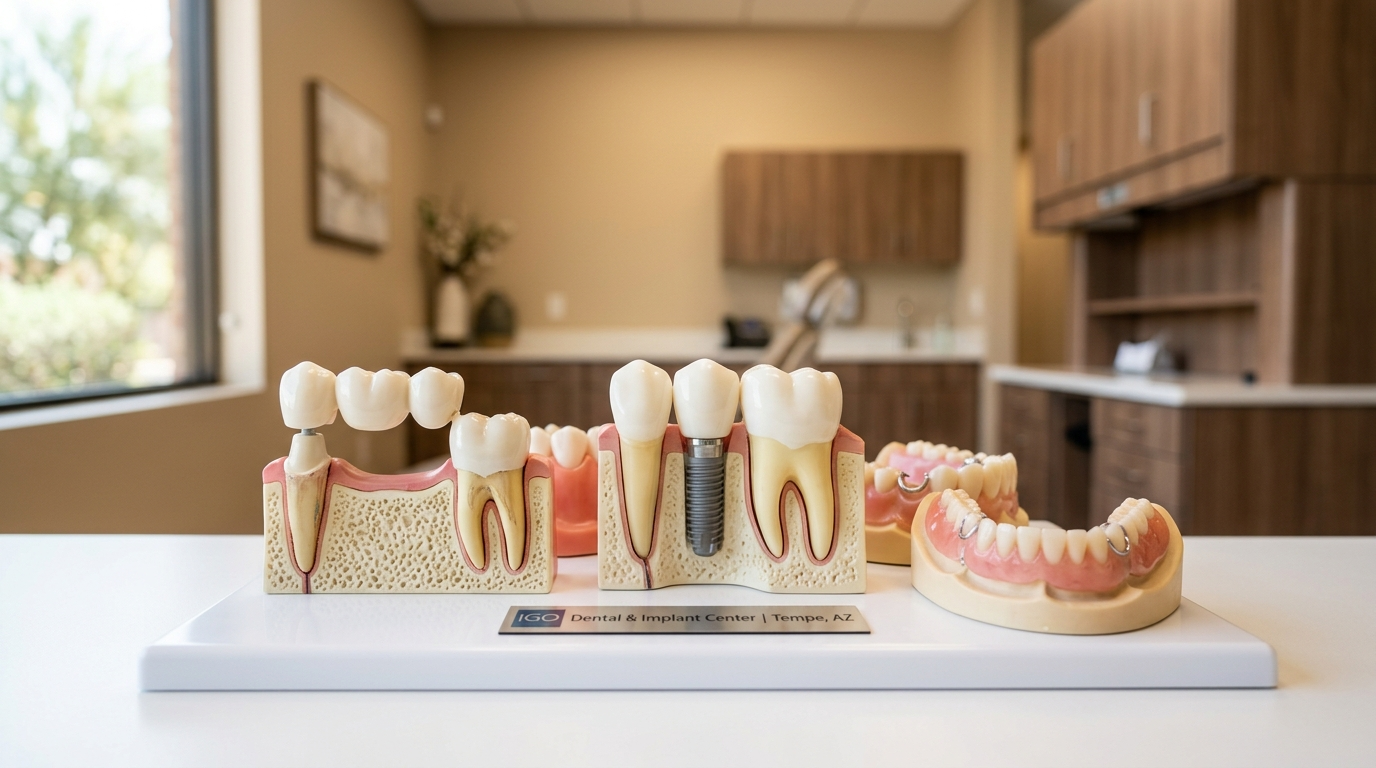
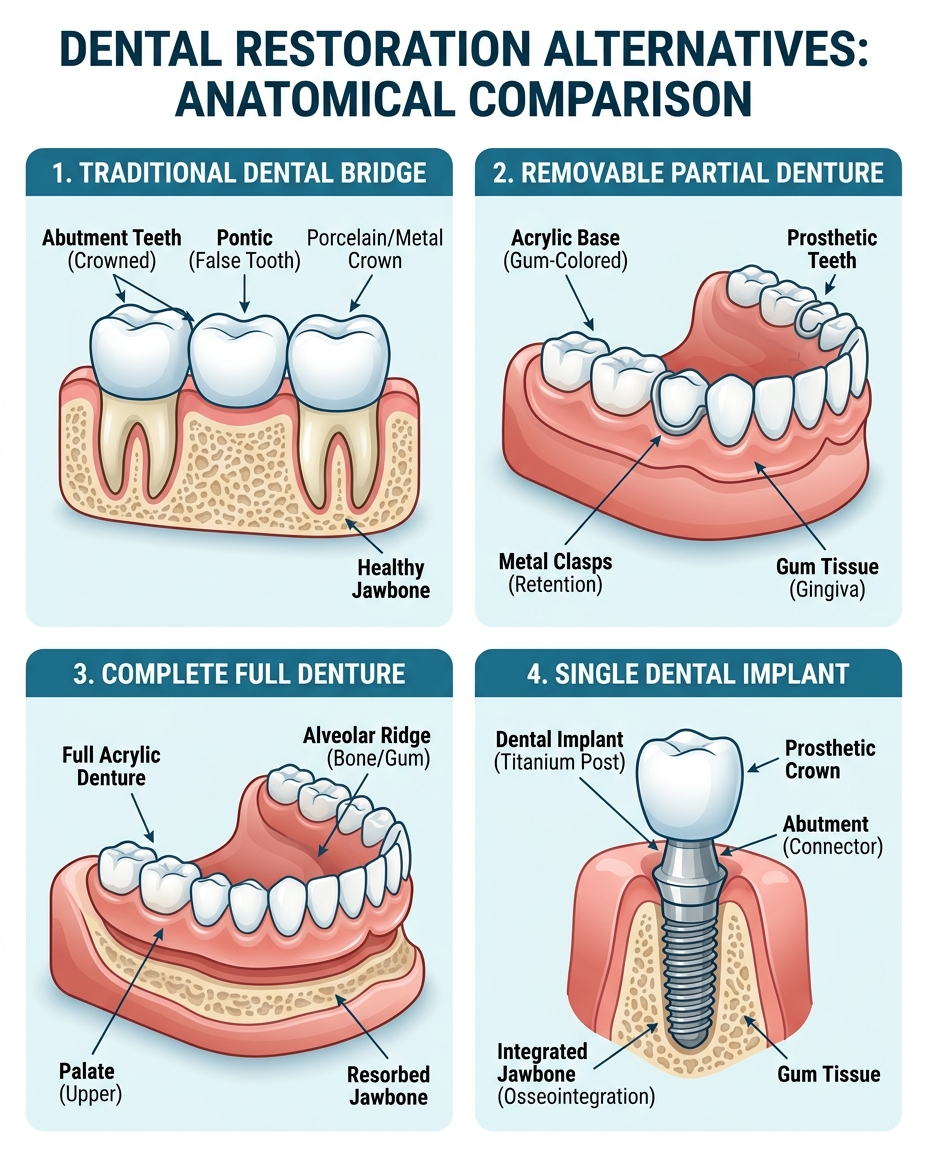
One of the most popular alternatives to dental implants is the traditional dental bridge. A bridge literally “bridges” the gap left by one or more missing teeth by anchoring to adjacent healthy teeth. This alternative to dental implants is fixed in place—meaning you don’t remove it like dentures—and feels remarkably natural.
Advantages of dental bridges:
- Faster than implants—typically completed in 2-3 appointments
- Lower cost than dental implants
- No bone grafting required
- Looks and feels natural
- Restores chewing function
Disadvantages of dental bridges:
- Requires grinding down healthy adjacent teeth
- Shorter lifespan than implants (5-15 years vs. 25+ years)
- Cannot be used if adjacent teeth are unhealthy
- Food can trap underneath the bridge
If you’re missing one to three consecutive teeth and have healthy teeth on either side, a dental bridge may be an excellent alternative to dental implants. Dr. Han Choi can assess whether this solution works for your situation.
🦷 REMOVABLE PARTIAL DENTURES: FLEXIBLE TOOTH REPLACEMENT
A removable partial denture is another practical alternative to dental implants for patients missing multiple teeth. Unlike bridges, partial dentures don’t require grinding down healthy teeth. Instead, they use clasps to attach to your remaining natural teeth and rest on your gum tissue.
Advantages of removable partial dentures:
- No healthy teeth need to be altered
- Affordable alternative to dental implants
- Easy to clean and maintain
- Can replace multiple missing teeth
- Quick to fabricate
Disadvantages of removable partial dentures:
- Must be removed daily for cleaning
- Can feel bulky or uncomfortable initially
- Speech and eating may require adjustment
- Clasps may be visible when smiling
- Requires ongoing adjustments
🦷 RESIN-BONDED BRIDGES: THE MINIMAL-PREP ALTERNATIVE
Also called Maryland bridges, resin-bonded bridges represent a minimally invasive alternative to dental implants for replacing a single missing tooth. This option uses a tooth-colored resin to bond a replacement tooth to the back of adjacent teeth, requiring little to no tooth preparation.
Resin-bonded bridges work best for alternatives to dental implants when replacing front teeth in younger patients. They’re quick to place, affordable, and preserve tooth structure. However, they’re less durable than traditional bridges and may not work for back teeth where chewing forces are stronger.
🦷 COMPLETE DENTURES: FULL-MOUTH TOOTH REPLACEMENT
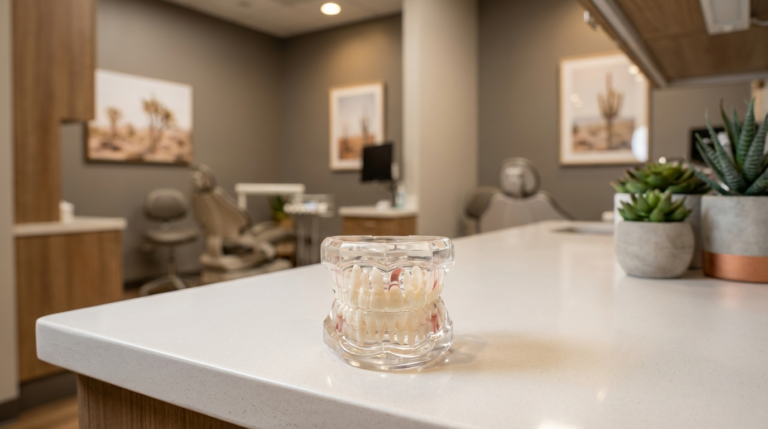
For patients missing all or most of their teeth, complete dentures are a classic alternative to dental implants. Modern dentures are custom-made to fit your mouth precisely and can look remarkably natural. They replace the entire upper arch, lower arch, or both.
Advantages of complete dentures:
- Most affordable full-mouth replacement option
- No surgery required
- Can be completed relatively quickly
- Easy to adjust and modify
- Improves facial appearance and support
Disadvantages of complete dentures:
- Requires daily removal and cleaning
- Can slip or move while eating or talking
- Bone loss continues over time, requiring adjustments
- Eating and speech take time to adjust to
- Requires denture adhesive for stability

🦷 IMPLANT-SUPPORTED DENTURES: HYBRID ALTERNATIVE
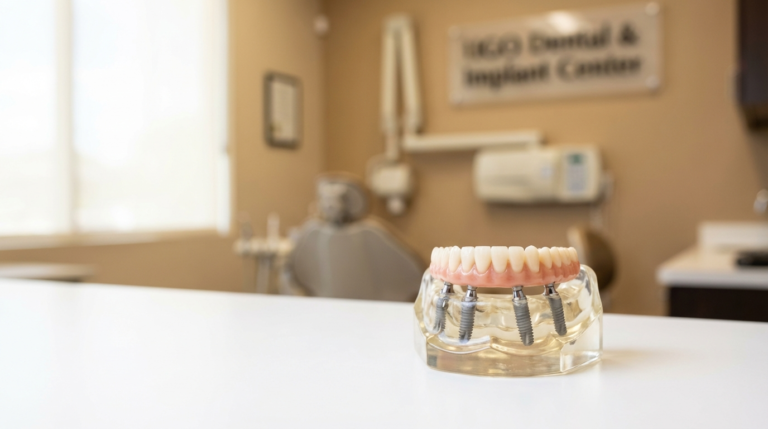
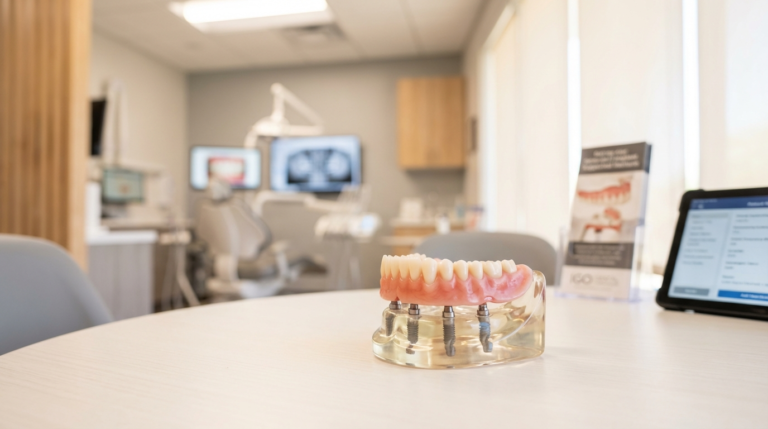
For patients wanting the best of both worlds, implant-supported dentures combine features of alternatives to dental implants with implant technology. A few dental implants anchor a denture in place, providing superior stability and chewing power compared to traditional dentures alone.
While this option involves implant placement, it requires fewer implants than full-arch restoration and costs less than traditional alternatives to dental implants like complete dentures require ongoing adjustment. The denture still comes out for cleaning, but it stays securely in place during use.
🦷 COMPARING COSTS: ALTERNATIVES TO DENTAL IMPLANTS
Cost is often the primary reason patients explore alternatives to dental implants. Here’s a general breakdown:
- Dental bridges: $1,000-$3,000 per tooth
- Removable partial dentures: $500-$1,500
- Resin-bonded bridges: $500-$1,200
- Complete dentures: $1,000-$3,000 per arch
- Implant-supported dentures: $5,000-$15,000
- Dental implants: Starting at $1,999 for single implants
While implants have a higher upfront cost, they last 25+ years, making them cost-effective long-term. However, if budget is your primary concern, alternatives to dental implants provide immediate solutions. We offer flexible payment plans through Cherry to make treatment affordable.
🦷 WHICH ALTERNATIVE IS RIGHT FOR YOU?
Choosing between alternatives to dental implants depends on several factors:
Choose a dental bridge if: You’re missing 1-3 consecutive teeth and have healthy adjacent teeth. You want a fixed solution that feels natural and lasts 10-15 years.
Choose a partial denture if: You’re missing multiple non-consecutive teeth and want to preserve healthy teeth. You prefer an affordable, removable option.
Choose a resin-bonded bridge if: You’re missing a single front tooth and want minimal tooth preparation. You’re younger and your bite is stable.
Choose complete dentures if: You’re missing all or most teeth and want the most affordable full-mouth solution. You don’t mind a removable appliance.
Choose implant-supported dentures if: You want better stability than traditional dentures but fewer implants than full-arch restoration. You want a hybrid approach combining benefits of alternatives to dental implants.
❓ FREQUENTLY ASKED QUESTIONS
What are the main alternatives to dental implants?
The primary alternatives to dental implants include dental bridges, removable partial dentures, resin-bonded bridges, complete dentures, and implant-supported dentures. Each offers different benefits depending on how many teeth you’re missing and your budget.
How long do alternatives to dental implants last?
Dental bridges typically last 10-15 years. Removable dentures last 5-8 years before needing adjustment. Resin-bonded bridges last 5-10 years. Complete dentures require replacement every 7-10 years due to bone loss. Dental implants, by comparison, last 25+ years.
Are alternatives to dental implants covered by insurance?
Most dental insurance plans cover a portion of bridges and dentures, typically 50%. However, coverage varies by plan. Contact your insurance provider to understand your specific benefits for alternatives to dental implants.
Can I eat normally with alternatives to dental implants?
Dental bridges allow nearly normal eating once adjusted. Removable dentures require softer foods initially. Complete dentures may limit certain hard or sticky foods. Implant-supported dentures offer better chewing power than traditional dentures. Dental implants provide the most natural eating experience.
Do alternatives to dental implants require surgery?
No. Dental bridges, removable dentures, and resin-bonded bridges require no surgery. Implant-supported dentures require minor implant placement surgery. This is why many patients prefer non-surgical alternatives to dental implants when they want to avoid surgery.
How do I care for alternatives to dental implants?
Dental bridges are cared for like natural teeth—brush and floss daily. Removable dentures must be removed nightly and soaked in denture solution. Complete dentures require daily cleaning and proper storage. Resin-bonded bridges need careful flossing. Proper care extends the lifespan of all alternatives to dental implants.
📍 VISIT IGO DENTAL & IMPLANT CENTER IN TEMPE

IGO Dental & Implant Center
512 E Southern Ave Suite 101
Tempe, AZ 85282
📞 (602) 999-8888
Hours:
Mon: 9-5 | Tue: 11-7 | Wed: 9-5 | Thu: 10-6 | Fri: 9-3 | Sat: 8-2
Serving Tempe, Mesa, Chandler, Gilbert, and the Greater Phoenix area.
New Patient Special: $89 – Includes exam, X-rays, and consultation!
We offer flexible payment plans through Cherry to make your treatment affordable.
Not sure which tooth replacement option is best for you? Lucy, our AI receptionist, is available 24/7 to answer questions and help you schedule a consultation with Dr. Han Choi. Chat anytime—day or night—to explore your alternatives to dental implants.
Ready to explore your alternatives to dental implants? Call (602) 999-8888 or schedule online today!
View our smile gallery to see real patient results from all types of tooth replacement solutions!