How to Fix Gum Disease: Treatment Options at IGO Dental
If you’re struggling with red, swollen, or bleeding gums, you’re not alone—millions of Americans face gum disease treatment challenges every year. The good news? Gum disease treatment is highly effective when caught early and managed properly. Whether you have mild gingivitis or more advanced periodontitis, understanding your treatment options is the first step toward a healthier smile.
At IGO Dental & Implant Center in Tempe, Dr. Hanna Choi, provides comprehensive dental care with a gentle, patient-centered approach. Specializing in cosmetic and general dentistry, Dr. Hanna Choi helps patients achieve healthy, beautiful smiles they’re proud to show off.

🦷 UNDERSTANDING GUM DISEASE TREATMENT OPTIONS
Gum disease treatment varies depending on the severity of your condition. Early-stage gum disease, known as gingivitis, can often be reversed with proper home care and professional cleaning. However, advanced gum disease (periodontitis) requires more intensive intervention to prevent tooth loss and bone deterioration.
The key to successful gum disease treatment is catching the problem early. According to peer-reviewed research, patients who seek treatment in the early stages of gum disease have significantly better outcomes and require less invasive procedures.
🦷 PROFESSIONAL CLEANING: THE FOUNDATION OF GUM DISEASE TREATMENT
The first line of defense in gum disease treatment is professional cleaning by a dental hygienist or dentist. Unlike your at-home toothbrush, professional tools can remove tartar and plaque buildup that contribute to gum inflammation and infection.
During a professional cleaning for gum disease treatment, your hygienist will carefully remove buildup from above and below the gum line. This thorough cleaning eliminates the bacterial colonies causing your gum disease and creates a fresh start for healing. Many patients notice improvement in gum health within just a few weeks of professional care.
For mild gingivitis, professional cleaning combined with improved home care is often sufficient. However, if your gum disease has progressed, additional gum disease treatment steps may be necessary to restore your oral health.

🦷 SCALING AND ROOT PLANING: ADVANCED GUM DISEASE TREATMENT
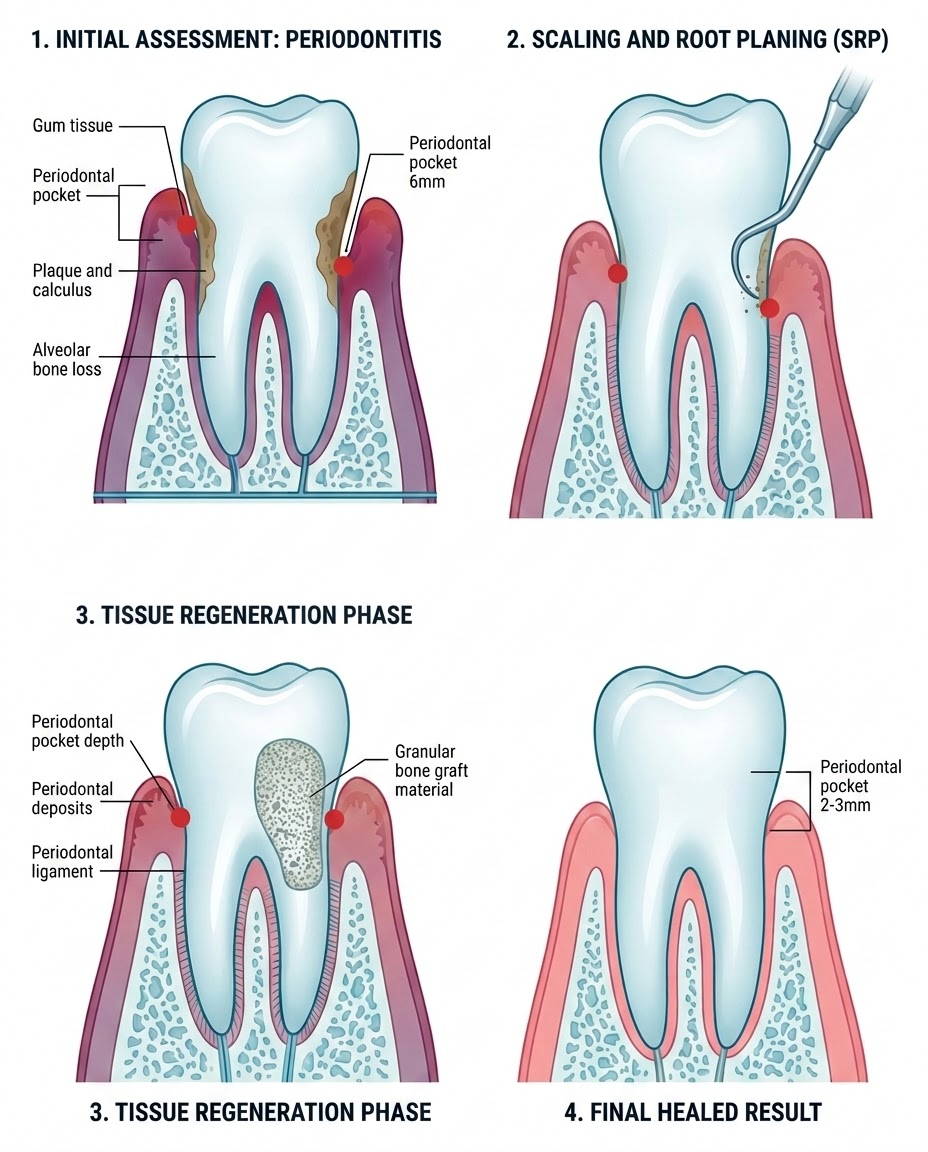
When gingivitis progresses to periodontitis, gum disease treatment typically involves a procedure called scaling and root planing (SRP). This non-surgical deep cleaning targets the root surfaces of your teeth, removing bacteria and toxins that have accumulated beneath the gum line.
During scaling and root planing for your gum disease treatment, Dr. Hanna Choi uses specialized instruments to gently clean deep pockets between your teeth and gums. The procedure is performed under local anesthesia to ensure your comfort. Root planing smooths the tooth root surfaces, making it harder for bacteria to reattach and promoting gum reattachment to your teeth.
This form of gum disease treatment is highly effective for moderate periodontitis and can often prevent the need for more invasive surgical procedures. Most patients require two to four appointments to complete the full treatment, with each quadrant of your mouth addressed thoroughly.
🦷 SURGICAL OPTIONS FOR ADVANCED GUM DISEASE TREATMENT
In cases of severe gum disease, surgical gum disease treatment may be recommended. Procedures such as flap surgery (pocket reduction surgery) and bone grafting help restore lost bone and gum tissue. These advanced treatment options are designed to save teeth that might otherwise be lost to advanced periodontitis.
Flap surgery involves lifting the gum tissue to access the tooth root and bone underneath, allowing for thorough cleaning and removal of diseased tissue. Bone grafting, when necessary as part of your gum disease treatment, involves placing bone-building material to regenerate lost bone structure. The American Dental Association recognizes these procedures as evidence-based approaches to managing severe periodontal disease.
🦷 HOME CARE: YOUR ROLE IN SUCCESSFUL GUM DISEASE TREATMENT
Professional care is only half the equation—your daily habits are equally important for successful gum disease treatment. After receiving treatment, maintaining excellent oral hygiene is essential to prevent recurrence and protect your investment in your oral health.
Effective home care for gum disease treatment maintenance includes brushing twice daily with a soft-bristled toothbrush, flossing daily, and using an antimicrobial mouthwash if recommended by your dentist. Electric toothbrushes can be particularly effective for patients managing gum disease, as they remove more plaque than manual brushing.
Additionally, lifestyle factors play a significant role in your gum disease treatment success. Smoking is the most significant risk factor for gum disease, so quitting smoking dramatically improves healing and treatment outcomes. Stress management, a balanced diet rich in vitamins C and D, and regular dental visits every 3-4 months help maintain the results of your treatment.
🦷 ANTIBIOTIC THERAPY IN GUM DISEASE TREATMENT
Some cases of gum disease treatment benefit from antibiotic therapy to control bacterial infection. Dr. Hanna Choi may prescribe oral antibiotics or recommend antibiotic gels that are placed directly into gum pockets during treatment. These targeted therapies help eliminate stubborn bacteria that contribute to persistent gum disease.
According to clinical studies, combining mechanical cleaning with antibiotic therapy significantly improves outcomes for patients with aggressive forms of gum disease. Your dentist will determine whether antibiotics are appropriate for your specific situation during your consultation.
🦷 PREVENTING GUM DISEASE RECURRENCE
After completing gum disease treatment, preventing recurrence is critical. Many patients develop gum disease again if they return to previous habits or skip regular dental visits. Establishing a maintenance schedule with Dr. Hanna Choi helps catch any early signs of recurrence before they become serious problems.
Regular professional cleanings, typically every 3-4 months for patients with a history of gum disease, are essential for long-term success. During these visits, Dr. Hanna Choi monitors your gum health, checks pocket depths, and provides guidance on improving your home care routine. This proactive approach to gum disease treatment maintenance prevents the need for more invasive procedures in the future.
❓ FREQUENTLY ASKED QUESTIONS
How long does gum disease treatment take?
The timeline for gum disease treatment depends on the severity of your condition. Mild gingivitis may improve with one or two professional cleanings, while moderate periodontitis typically requires 4-6 weeks of scaling and root planing appointments. More advanced cases may require several months of treatment, including potential surgical procedures. Dr. Hanna Choi will provide a personalized timeline during your consultation.
Is gum disease treatment painful?
Most gum disease treatment procedures are performed under local anesthesia, so you shouldn’t experience pain during the procedure. You may feel pressure or vibration from the instruments, but not pain. After treatment, some mild soreness or sensitivity is normal and typically resolves within a few days. Dr. Hanna Choi prioritizes patient comfort throughout all treatment phases.
Can gum disease treatment prevent tooth loss?
Yes, early intervention with gum disease treatment can prevent tooth loss. When caught in the early stages, professional cleaning and improved home care can reverse gingivitis entirely. Even advanced periodontitis can be managed with appropriate gum disease treatment to save existing teeth. However, if significant bone loss has already occurred, tooth extraction may be unavoidable. This is why early detection and treatment are so important.
What is the cost of gum disease treatment?
The cost of gum disease treatment varies depending on the severity and type of procedure needed. Professional cleanings are often covered by dental insurance, while scaling and root planing or surgical procedures may have different coverage levels. We offer flexible payment plans through Cherry to make treatment affordable for all patients. Contact our office for a personalized cost estimate.
How often should I visit the dentist after gum disease treatment?
Patients with a history of gum disease should schedule professional cleanings every 3-4 months rather than the standard 6 months. These more frequent visits help monitor your gum health and catch any early signs of recurrence. Regular maintenance appointments are crucial to the long-term success of your gum disease treatment and help prevent future complications.
📍 VISIT IGO DENTAL & IMPLANT CENTER IN TEMPE

IGO Dental & Implant Center
512 E Southern Ave Suite 101
Tempe, AZ 85282
📞 (602) 999-8888
Hours:
Mon: 9-5 | Tue: 11-7 | Wed: 9-5 | Thu: 10-6 | Fri: 9-3 | Sat: 8-2
Serving Tempe, Mesa, Chandler, Gilbert, and the Greater Phoenix area.
New Patient Special: $89 – Includes exam, X-rays, and consultation!
We offer flexible payment plans through Cherry to make your treatment affordable.
Prefer texting over calling? Lucy, our AI-powered assistant, is always ready to chat. Ask her anything about our services or schedule your visit in seconds.
Ready for professional gum disease treatment? Call (602) 999-8888 or schedule online today!
View our smile gallery to see real patient results!